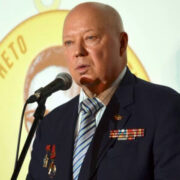
The English-language version of the online encyclopaedia Wikipedia cites the British historian Edward George, who claims that, in providing assistance to the MPLA in Angola, the USSR sent six BM-21 launchers in November 1975 rather than the four actually delivered. More importantly, it states that in Moscow the fuzes were supposedly forgotten and never included with the rockets dispatched for these multiple-launch rocket systems — the very rockets used at the Battle of Kifangondo! And this nearly ended in catastrophe!
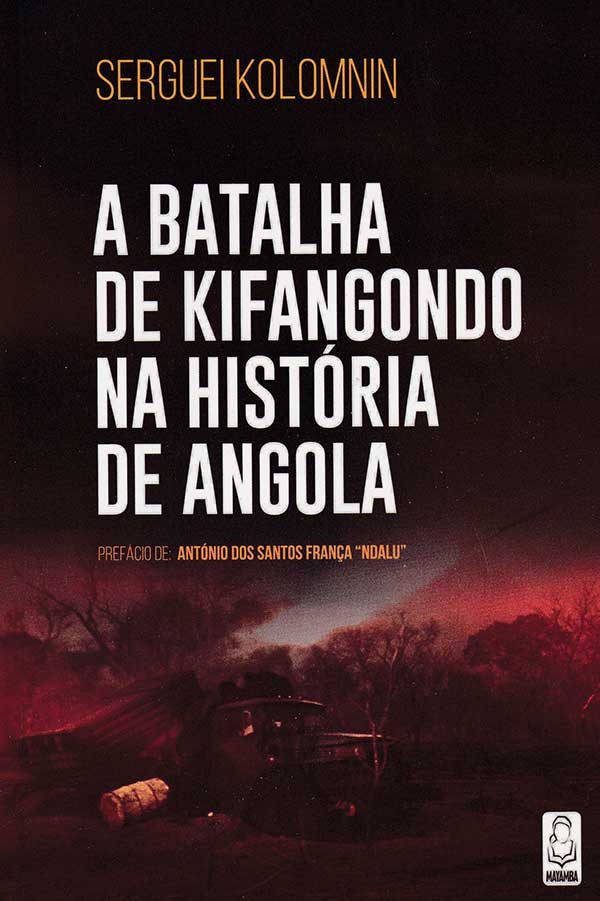
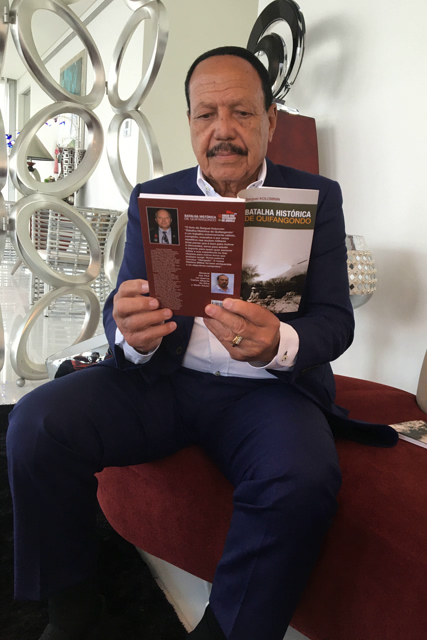
These claims are addressed here by the Russian historian and military journalist Sergei Kolomnin, author of “A Batalha de Kifangondo na história de Angola”, published in Angola by Mayamba Editora.
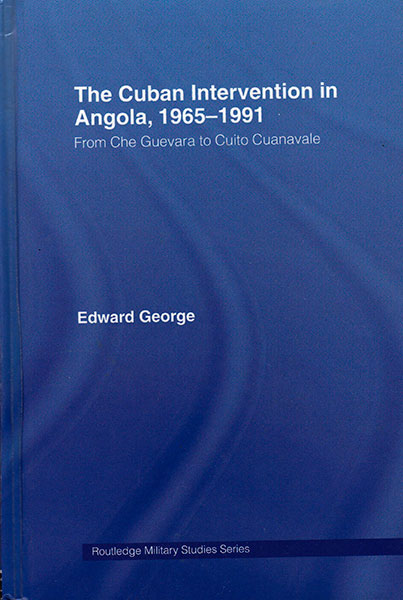
It is true that the article on the Battle of Kifangondo in the English-language Wikipedia cites the book by the British historian Edward George, «The Cuban Intervention in Angola, 1965–1991: From Che Guevara to Cuito Cuanavale», which contains these dubious assertions. But they do not correspond to the historical truth, and they can be described with complete confidence as defamation. Why, then, did the British historian Edward George lie in his historical study?
Let us quote the relevant passage from E. George’s book in full: «…more significant than their arrival, however, were the first six BM-21 missile-launchers which were brought up to Kifangondo during the night of 9/10 November. Since 7 November, a team of twenty Cuban specialists had been working to get them operational, but they had discovered that the Soviets failed to send fuses vital for the weapon’s operation. Realising it could take weeks to get replacements from Moscow, an urgent request was sent to Havana, and the fuses were flown in just before the BM-21s took up their positions. Ironically, this mix-up might have been to their advantage as it delayed the BM-21s’ deployment until only a few hours before the battle started, taking the enemy by surprise.»
How can I comment on these assertions by the British historian? As regards the number of Soviet BM-21 launchers used at the Battle of Kifangondo, different sources give different figures, and there are no precise supporting historical documents. We shall return to this later and establish the number — on the basis of facts.
But where did E. George obtain the information that «the Soviets failed to send fuses» for the rockets? He obviously cannot have taken part in the battle himself: he is far too young. Presumably someone told him — one of those who gave him interviews while he was preparing material for the book. But who? It is striking that the page containing this dubious information carries no references to any specific individuals: there are no footnotes at all. Full responsibility for the facts presented therefore rests with the author himself, Edward George.
Very well — let us investigate. But first, a few words about Edward George himself and about his book.
Edward George was born in London in 1972. He is British by citizenship, but Welsh by descent: his father came from Wales. After leaving King’s School Canterbury he entered the University of Bristol, where he read Spanish and Portuguese. This matters: George is not a historian by training but a linguist and lusophone specialist, and he defended his dissertation on the history of Cuban–Angolan relations in the Department of Hispanic Studies at Bristol.[1] While gathering material for that dissertation — on which the book «The Cuban Intervention in Angola, 1965–1991: From Che Guevara to Cuito Cuanavale» is based — he spent more than a year working in Cuba, in Havana, and visited Angola and South Africa, meeting veterans of this regional conflict.
At first glance, a serious researcher. His book was published by Cass Military Studies (now part of Routledge) in 2005, and in 2012 it was reissued in paperback and in electronic form. The hardback has been reprinted more than once: a substantial volume of 368 pages of text, plus illustrations. It has appeared in London and New York, is widely available online, and ranks among the most frequently cited works on the subject in the Western media. Some reviews call it, for instance, «the most important» of the available publications in this field.[2]
In describing historical events, E. George relies on interviews with participants: Angolans (from the MPLA as well as from the FNLA and UNITA) and South Africans. As he himself writes: «During my research I have carried out many long and detailed interviews, and I am grateful to the following people for their openness, honesty and humour: Holden Roberto, Paulo Jorge, Major Mateus Timóteo (FAA commander in Cuito Cuanavale), Eduardo António Matamata (former UNITA commander in Jamba), Dr Guerra Marques, and the dozen FAPLA veterans I interviewed in Menongue and Cuito Cuanavale, Johann Smith, Helmoed-Römer Heitman, Eric Lamprecht, Andy Kasrils, Johan Lehman, Danie Crowther and P.W. Botha.»
An impressive list of witnesses, as we can see. Some are significant figures: the FNLA leader Holden Roberto; Pieter Willem Botha, Prime Minister of South Africa from 1978 to 1984 and State President from 1984 to 1989; the South African historian Helmoed-Römer Heitman, and others. But here is the question: how objective is the testimony of these men — men who represent the side that was defeated?
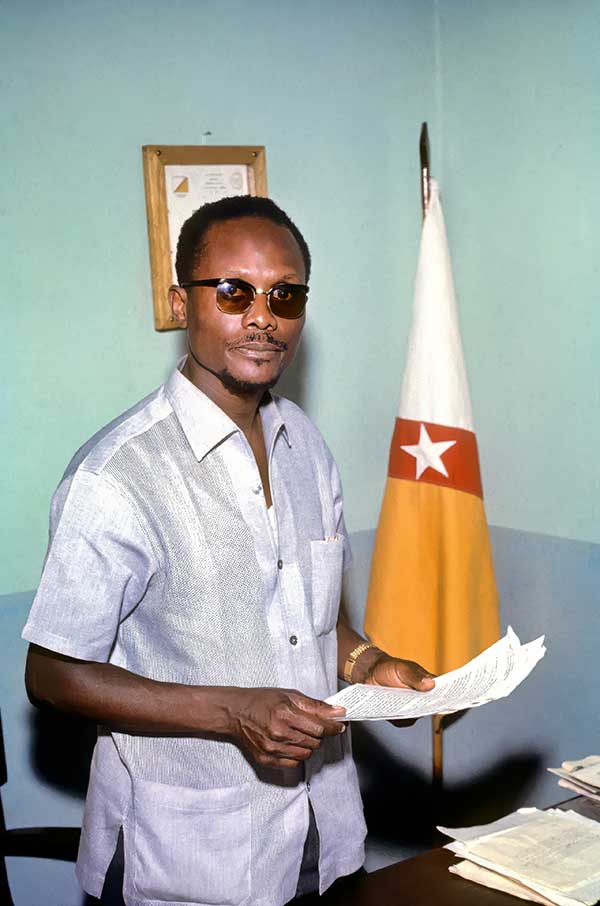
The description and analysis of events in Angola from 1975 up to the 2000s has one particular feature: very few historical documents have entered scholarly circulation. One is therefore obliged to rely on eyewitness testimony. Yet as we can see, that list of interviewees contains not a single name of a Cuban historian, or even of an ordinary Cuban witness to those events. Given the ambitious title of his book, this is, to put it mildly, strange. Though it is not accidental.
The explanation is simple: official Havana gave E. George access neither to its archives nor to its official spokesmen. Why? I contacted colleagues of mine, journalists in Cuba who have published in the press and written books on Havana’s assistance to Angola in 1975–1991. None of them recalled such a British historian, and the view was expressed that Edward George most probably failed to inspire confidence in the Cuban authorities — unlike his American colleague, the historian of Italian origin Piero Gleijeses, Professor of American Foreign Policy at the School of Advanced International Studies, Johns Hopkins University.[3] To Gleijeses the Cubans opened much of their archives.
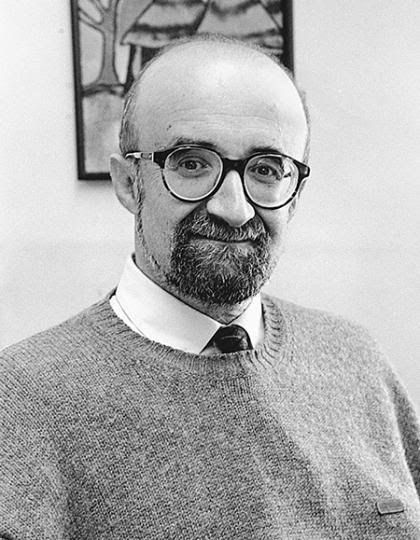
George himself mentions this, noting that in Havana he encountered «stubborn indifference from the Cuban government». But the fact remains: the British historian worked in Cuba without access to official historical documents and archives. He does mention, however, that in the course of his work he interviewed some two dozen Cuban internationalist veterans. Yet he named not one of them in the book, citing supposed confidentiality. A significant proportion of his sharpest and most contentious assertions therefore rests, in effect, on anonymous testimony. From a historical point of view, in other words, the evidential value of many of his conclusions and descriptions tends towards zero.
Moreover, having read his book, I formed the impression that E. George essentially belongs to the camp of those historians and former South African servicemen who hold that South Africa and UNITA won that war — and that the South Africans did not lose the Battle of Cuito Cuanavale at all.
In his work George casts doubt on Cuba’s principal reason for launching Operation Carlota and rules out any motive of disinterested internationalist assistance to the MPLA on Cuba’s part. He describes Operation Carlota as a «risky venture that turned into a 15-year Cuban occupation of Angola». And in assessing the Battle of Cuito Cuanavale he questions its significance as the decisive factor in the liberation of the peoples of southern Africa, calling the victory illusory or even bogus — he uses the term «spurious».[4] He holds that «this manoeuvre» (that is, the victory in the battle!) was used by Cuba as «political cover for its exit from the war».
With that last point — specifically, the fact that the war ended — one cannot argue. Cuba and Angola did indeed exit the war brilliantly. They ended it having won a joint victory over the South African forces and UNITA at the Battle of Cuito Cuanavale (1987–1988).[5] One may therefore dispute E. George’s terminology in this instance, but not the substance of the fact itself.
In his book E. George pushes his own narrative of events in Angola and of the course of Operation Carlota — a narrative which, though not in every respect, coincides on a number of points with the views of the South African generals. General Jannie Geldenhuys, for example, who was Chief of the South African Defence Force (SADF) from 1985 to 1990, asserts in his memoirs — better known as «A General’s Story» (full title «A General’s Story: From an Era of War and Peace», 1995) — that in the fighting around Cuito Cuanavalethe allied forces, FAPLA and the Cubans, suffered a crushing defeat.
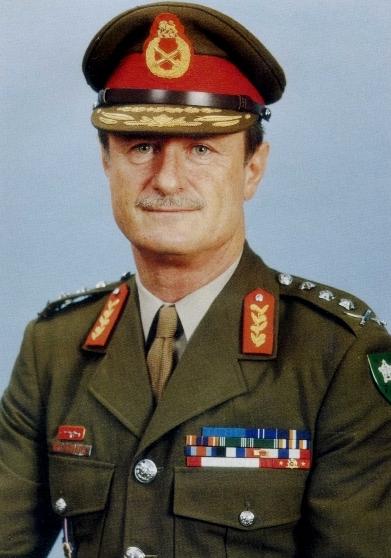
And to support his thesis of «victory» he cites casualty figures: FAPLA and the Cubans, on his account, supposedly lost around 5,000 men, against only 31 killed on the SADF side. He falsely asserts: «We did not attack Cuito Cuanavale…» and «We did not lose a single engagement in this campaign». This general passes off black as white, and white as black, without batting an eyelid. His memoirs would be far better titled «A General’s Fairy Tales»…
Perhaps I exaggerate, but I formed the impression that E. George as an author is highly sympathetic to statements by men of Jannie Geldenhuys’s kind — and consequently does not stand with both feet on the side of historical truth.
But E. George’s personal view of the broader confrontation between Cuba and Angola on the one side and the United States on the other, his assessments of Cuban actions and his dubious conclusions at odds with historical reality, are one thing. That, I repeat, is his own affair. It is his research, his book, his conclusions. It is quite another matter when he distorts, without a shred of evidence, real facts concerning Soviet assistance to the MPLA and the Cubans and the state of affairs on the battlefield at Kifangondo. That smacks of plain defamation.
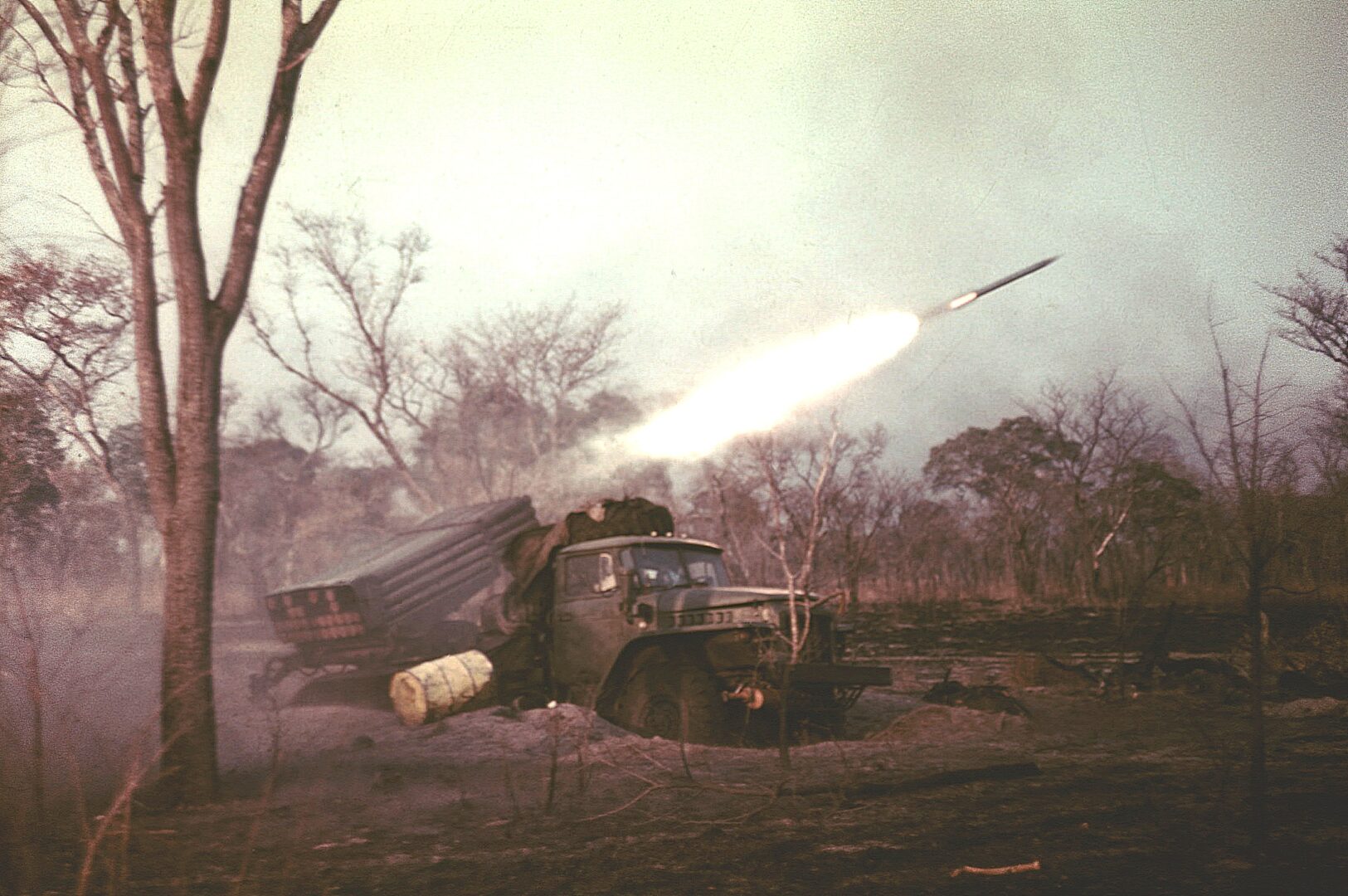
Let us therefore return to Edward George’s specific claim that the rockets sent from the USSR for the BM-21 Grad — for the defence of Luanda and for use at the Battle of Kifangondo in November 1975 — «turned out to have no fuzes». Where, then, could they have gone missing?
Delivering the Grads to Pointe-Noire: a feat by Soviet airmen
In the pages of his substantial book, E. George nowhere describes how the BM-21 Grad launchers that decided the outcome of the Battle of Kifangondo in favour of the MPLA and the Cubans actually reached Angola. Yet the story is an extraordinary one — and without it we cannot even begin to work out where and how the fuzes might have gone missing. If indeed they went missing at all. Let us therefore trace their route from the USSR to Angola. The full account is set out in my books on the Battle of Kifangondo,[6] in Russian and in Portuguese. I shall not repeat it in detail here,[7] but I will give the essentials.
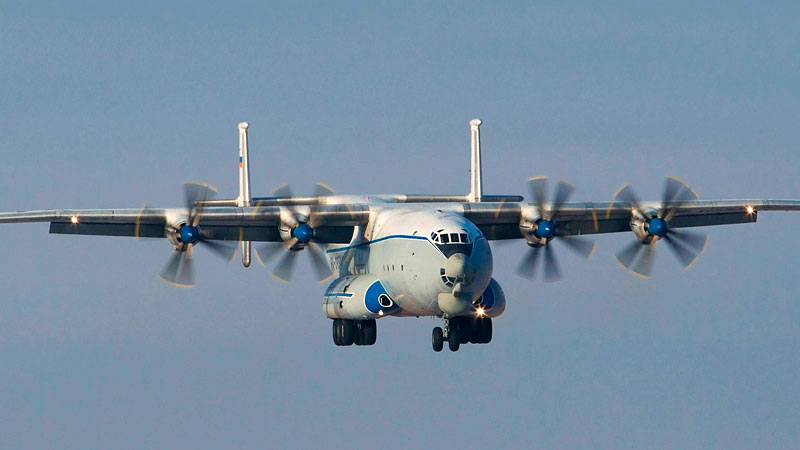
The Soviet airmen of the Mga Division of Military Transport Aviation, who carried weapons for the MPLA aboard An-22 (Antei) and An-12 aircraft to Congo-Brazzaville, performed a genuine feat. According to data published on the website of the division, in November and December 1975 alone the crews of its 81st and 566th military transport aviation regiments flew 203 sorties delivering weapons, ammunition and other military stores for the MPLA to Brazzaville and Luanda,[8] carrying 1,069 tonnes of special cargo.
On the very eve of Angolan independence — the ceremony was set for Luanda on 11 November 1975 — seventeen giant An-22s[9] of the 81st regiment landed at Brazzaville almost continuously, unloaded, and took off again. The reason was that until independence had been officially declared, Soviet aircraft could not land in Luanda. Although the MPLA fully controlled the capital and its airfield, Angola still formally belonged to Portugal, a NATO member state. Soviet assistance to the MPLA was therefore routed through Angola’s neighbour, Congo-Brazzaville, whose authorities were well disposed towards the movement and towards the Cuban internationalists assisting it. Among the armaments delivered to Brazzaville were four BM-21 launchers. The names of the pilots who carried the Grads and their ammunition are known: they were first-class military pilots of the 81st regiment Boris Petrovich Zhukov, Vitaly Vasilyevich Dyakonov and Anatoly Vasilyevich Yatmanov.
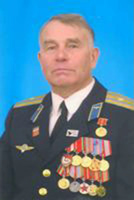
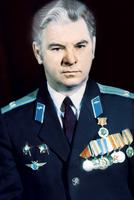
But for these launchers to reach Angola as quickly as possible, so that the MPLA could use them, they had also to be delivered to the Congolese ocean port of Pointe-Noire, where the Cuban motor vessel La Plata was already waiting to carry them to Luanda. This could be done only by air. The railway between Brazzaville and Pointe-Noire, more than 500 km long, is of so-called Cape gauge — 1,067 mm — in plain terms a narrow-gauge line, unsuitable for carrying heavy equipment. And in any case there was no time to organise such transport.
There was a problem, however: the runway at Pointe-Noire was not rated for aircraft as large and heavy as the An-22. And the BM-21 simply would not fit into an An-12, or into the Cuban Bristol Britannia aircraft with which Cuba was ferrying its fighters and weapons to Luanda. A risk had to be taken.
To shorten the landing run the Antei was stripped down as far as possible: on each flight only a single BM-21 was left in the cargo hold. The deputy commander of the 81st Military Transport Aviation Regiment, Lieutenant Colonel Boris Zhukov, personally flew four missions to Pointe-Noire. But first he flew out to the airfield in the lighter An-12 to reconnoitre the runway.
A witness to those dramatic events, my comrade from the Military Institute of the USSR Ministry of Defence, the military interpreter Vladimir Kostrachenkov, who was then working at Pointe-Noire with a group of Soviet military specialists, recalls:[10]«One day our An-12 flew in, bringing the commander of an An-22 crew[11](the famous Antei) to establish on the spot whether BM-21 Grad launchers could be delivered to Pointe-Noire aboard the Antei. The runway at Pointe-Noire was rated neither in length nor in surface quality to take such heavy aircraft. The risk was great; the commander walked the runway for a long time, looking and calculating, and then decided in favour, saying: ‘We’ll land.’»
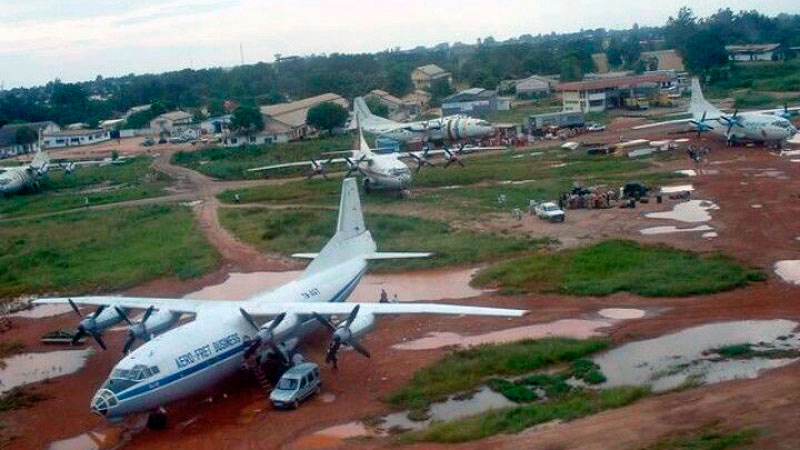
«When the first Antei appeared in the sky, we on the ground watched the landing with excitement and bated breath. Touchdown! And the heavy aircraft, its engines roaring in reverse thrust, ran the full length of the runway. The landing was masterly; the only casualties were several huts belonging to local people that had been put up at the end of the strip. As the aircraft turned, the blast from its powerful engines simply swept them away, and boxes and sheets of cardboard and tin that had served as walls and roofing went flying into the air.»[12]
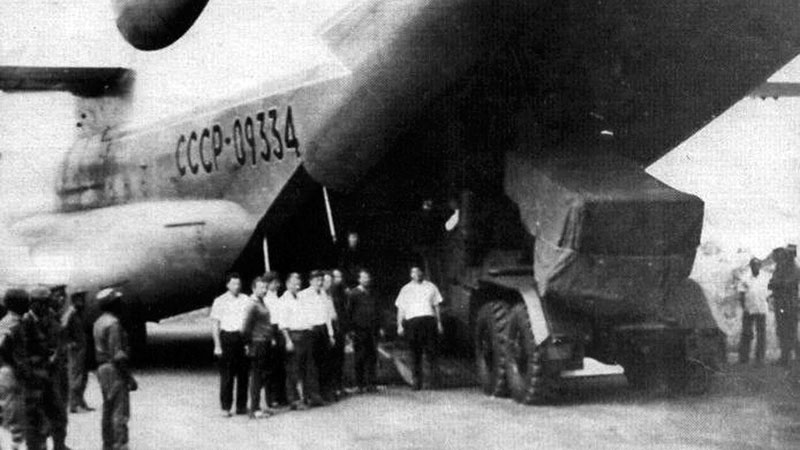
So, at enormous risk, the An-22 crews carried four launchers, one at a time, from Brazzaville to the port of Pointe-Noire — together with the ammunition for the Grads. But what happened next? Let us again give the floor to Vladimir Kostrachenkov.
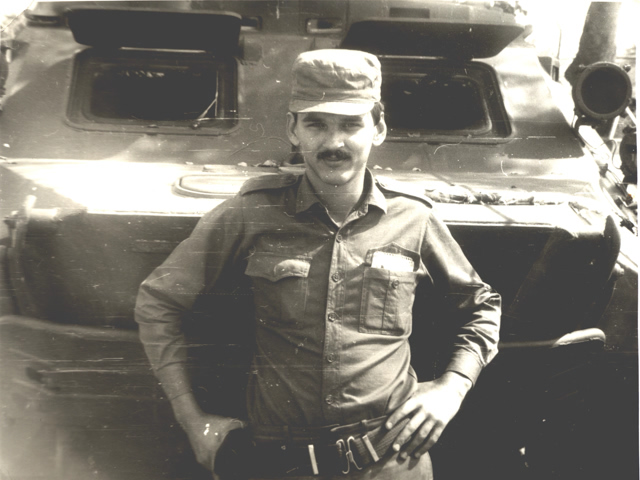
«During those November days we received the Anteis delivering the BM-21 launchers and their ammunition. In the port, where the launchers were then taken by night from the air base, our BM-21 specialists, Captains V. Obyedkov and V. Chernyshov, were scratching their heads, since they had no experience of loading rocket launchers onto seagoing vessels. But together with the Cubans they managed to rig the slings so as not to damage the launch rails, and the crane safely lowered four BM-21 Grads and 240 rockets in green crates into the hold.»
Is a BM-21 rocket fuze easy to lose?
In 1975 only one type of high-explosive fragmentation rocket had been developed and was in use for the BM-21 Grad: the M-21OF, index 9M22, with the MRV or MRV-U fuze.[13] The rocket was 2 m 87 cm long and weighed 66.4 kg. Its 18.4 kg warhead contained 6.4 kg of explosive.
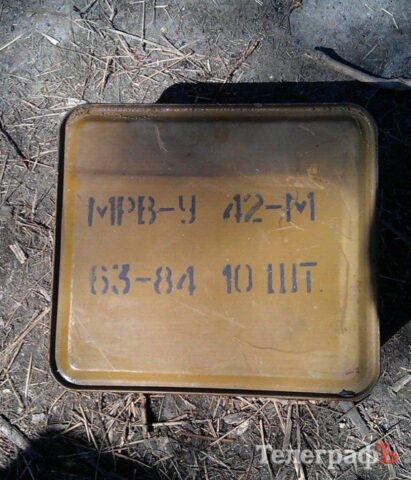
The MRV contact fuze was conical in shape (see photograph) and was screwed onto the nose of the rocket strictly before the rocket was loaded into the launch rail. And each fuze weighed about ONE kilogram — to be exact, 0.95 kg. Under safety regulations, fuzes are stored separately from the crates of rockets. Under the rules of Soviet rocket artillery, every 40 rockets (one basic load for a BM-21) are accompanied by one wooden crate of fuzes, measuring 658 × 598 × 206 mm. Packed inside it are four metal «tins», each holding 10 fuzes. The mass of a crate containing four tins and 40 MRV (MRV-U) contact fuzes is 48 kg.
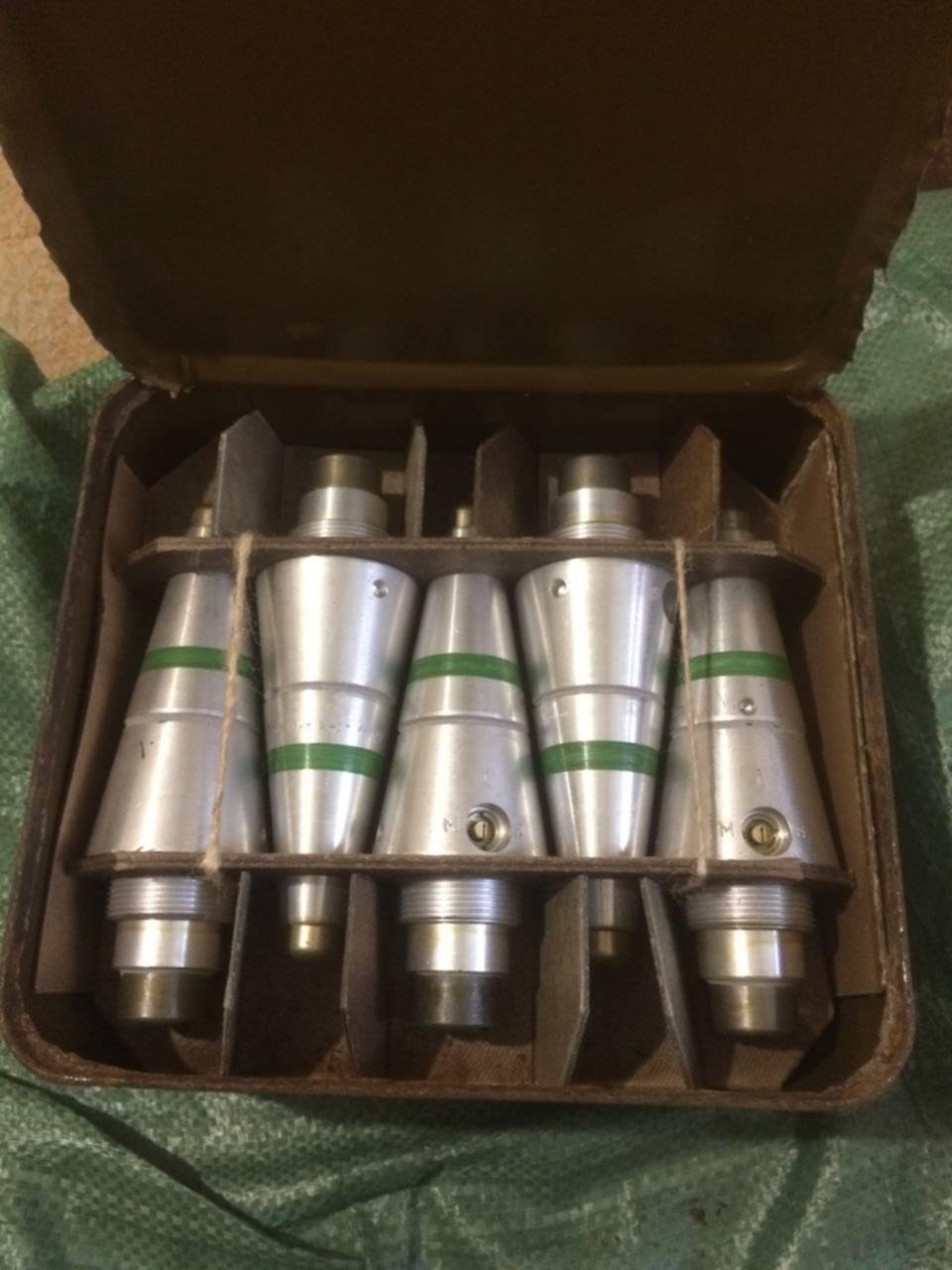
And now let us ask ourselves: do you believe that two Soviet BM-21 specialists, Captains Obyedkov and Chernyshov — «experienced, conscientious and capable lads», in Kostrachenkov’s words — who received the launchers and rockets from the An-22 crews and then loaded them all onto the Cuban ship, forgot to unload from the aircraft, and then to load onto the Cuban vessel, the fuzes for 240 rockets? That would have meant at least six crates, each weighing almost 50 kg.
And that is if there were only 240 rockets. The Cubans — and indeed E. George himself in his book — mention more than 700 rockets fired from the BM-21s at Kifangondo.[14] It is possible that the 240 rockets were only the first consignment delivered from the USSR to Pointe-Noire, and that the remainder were flown in later and sent on to Luanda aboard a different Cuban ship. On this I have no reliable information.
Or perhaps the crates of fuzes were never loaded into the An-22s in the USSR at all? Simply forgotten? But in that case, why did the experienced Soviet officers Obyedkov and Chernyshov, who took delivery of the ammunition at Pointe-Noire, not raise the alarm? Why did they not report it to our embassy? They should have been court-martialled for such a lapse — yet they were later decorated in the USSR.
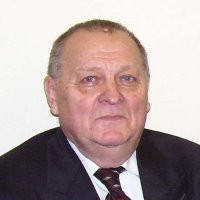
I met and interviewed on several occasions the man who in 1975 was responsible at the Soviet embassy in Brazzaville for the delivery and handover of weapons and other cargo to the MPLA and the Cubans: Colonel Boris Gavrilovich Putilin. It was he who supervised all arms deliveries to the MPLA and the Cubans and who personally met the aircraft carrying the weapons. Officially Putilin held the post of First Secretary of the Soviet embassy in Brazzaville; in reality he was the resident of the Main Intelligence Directorate (GRU) of the General Staff of the Soviet Armed Forces in the country.[15]
This courageous man can with full justification be called the godfather of the MPLA and Cuban victory at Kifangondo. For it was Boris Putilin who, in November 1975, at a critical moment for the MPLA when the enemy was already at the gates of Luanda, persuaded Moscow of the need for an urgent delivery of such weapons. And that was no easy thing to achieve.
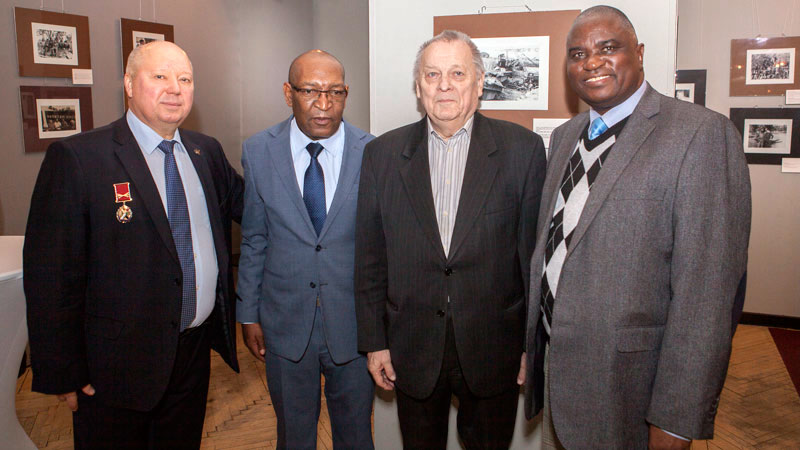
It is evident that such weapons were being prepared for delivery to Angola — that is a fact. It was no accident that the group of Soviet specialists which arrived in Brazzaville on 1 November 1975 included rocket-artillery men. Nor was it an accident that the twenty Cuban BM-21 specialists mentioned by E. George had arrived in Luanda from Cuba as early as 4 November aboard a Cubana Bristol Britannia. Moscow intended to begin moving the launchers and other heavy equipment to Luanda as soon as the MPLA had proclaimed independence and Soviet aircraft could land there legitimately.
But the situation was not developing in the MPLA’s favour. The forces of the FNLA leader Holden Roberto and his Zairean ally were already at the gates of the Angolan capital. Several thousand well-armed FNLA fighters and regular Zairean army units were advancing on Luanda, supported by some fifteen AML-90 Panhard armoured cars, South African long-range artillery and Portuguese «commandos». Facing them in positions at Kifangondo, on the outskirts of Luanda, was a force of only 1,300 MPLA fighters and Cuban volunteers, armed with light small arms, a few mortars and three Soviet 76 mm ZIS-3 anti-tank guns.
The situation was critical. Yet despite Moscow’s serious doubts about the feasibility of flying BM-21 launchers to the Congo, Boris Putilin managed to insist that the Grads be delivered urgently to Luanda via Brazzaville — and to demonstrate that such delivery was technically possible.
And the Grads, brought up to Kifangondo during the night of 9/10 November 1975, struck a sudden and devastating blow at the decisive moment against the advancing FNLA and Zairean troops, scattering them and putting them to flight. Had the defenders of Luanda not had at their disposal, in that decisive clash of 10 November 1975, so powerful and effective a weapon as four BM-21 Grad launchers, it is very probable that on 11 November independence would have been proclaimed in Luanda not by the MPLA leader Agostinho Neto but by the FNLA leader Holden Roberto. And events in Angola would then have taken an entirely different course.
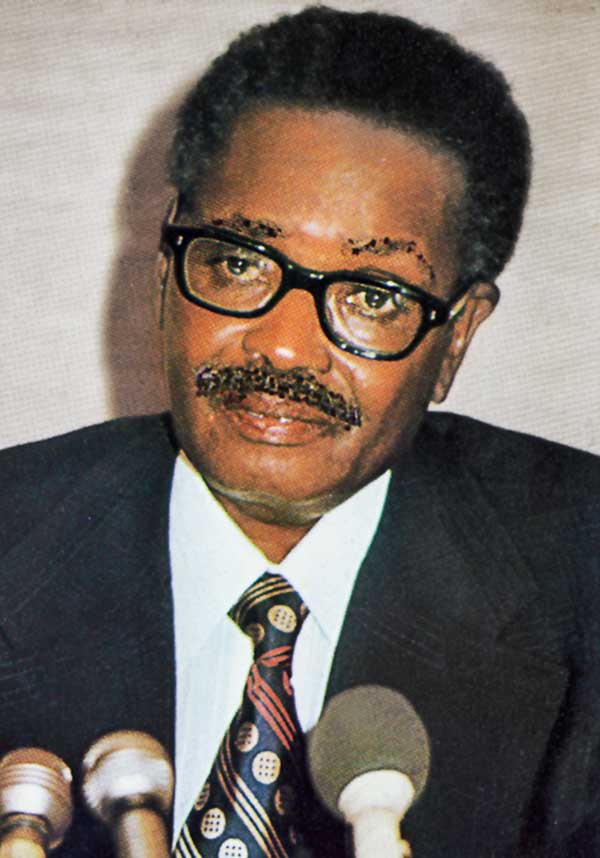
Now, in his conversations with me, Boris Putilin never once mentioned any such «loss» of fuzes, or any other shortcoming in the delivery of the BM-21s from the USSR. My notes of the interview with him contain this remark of his: «After our airmen had delivered the BM-21s to the Congo and they had been dispatched by sea to Luanda, I sent a cipher telegram to the Centre reporting that everything was in order, and thanking Moscow for its promptness.»
Let us ask the next question. Might the fuzes have «gone missing» during the voyage of the Cuban motor vessel La Plata to Luanda, or during unloading in the port? And might someone who witnessed those events, or took part in the battle, have told George so? Yet not a single Angolan or Cuban — all of them real and active participants in the battle, with whom I spoke while gathering material for my book on Kifangondo — mentioned anything of the kind. Not a word.
Like E. George, I have been to Cuba and have worked in Angola, and I have met and interviewed many Cubans and Angolans who were direct participants in the battle. In particular I spoke at length with the volunteer instructor García Martínez[16] and with a number of other Cubans. I met many Angolan participants in the battle. Among them was General António dos Santos França «Ndalu», who headed the defenders’ staff at Kifangondo and who later wrote the preface to the Angolan edition of my book.[17] In that preface, at my request, he specified the number of BM-21s that took part in the battle: four vehicles. This matched the findings of my own research into the delivery of the Grads — first to the Congolese airfield at Pointe-Noire aboard Soviet An-22s, and then to Angola aboard a Cuban ship. There were four of them.
I also met and spoke at length with the officer who commanded the artillery of the Kifangondo defenders in 1975, now General Roberto Leal Monteiro «Ngongo», and with one of the FAPLA commanders in that battle, then a member of a ZIS-3 gun crew and today General Carlos Alberto da Silva e Mello Xavier. It was he who, with well-aimed shots on the morning of 10 November 1975, knocked out two enemy AML-90 Panhard armoured cars on the bridge over the river Bengo.
And not one of my interlocutors mentioned, or told me of, any problem with fuzes for BM-21 rockets in the positions at Kifangondo, or of any suggestion that the fuzes had not been delivered from the USSR and had to be reordered from Cuba. Nor do the Cuban authors of books describing the part played by Cuban volunteers at Kifangondo mention these problems by so much as a word or a hint.[18]
But it is worth asking: where does this story about the fuzes actually come from?
I decided to trouble once again the Angolan generals who took part in that battle in November 1975 — Ndalu and Carlos Xavier. I telephoned Luanda and asked them to clarify the matter. General Ndalu categorically rejected the British historian’s account, saying that he recalled no problems whatsoever with fuzes for BM-21 rockets at the Battle of Kifangondo. He added no new facts, however.
The conversation with General Carlos Xavier, by contrast, proved very interesting indeed. He is a talkative man with an excellent memory. And he recalled that there had in fact been problems with fuzes! But they had occurred much earlier, before the Battle of Kifangondo began — and they concerned the shells for the ZIS-3 guns.
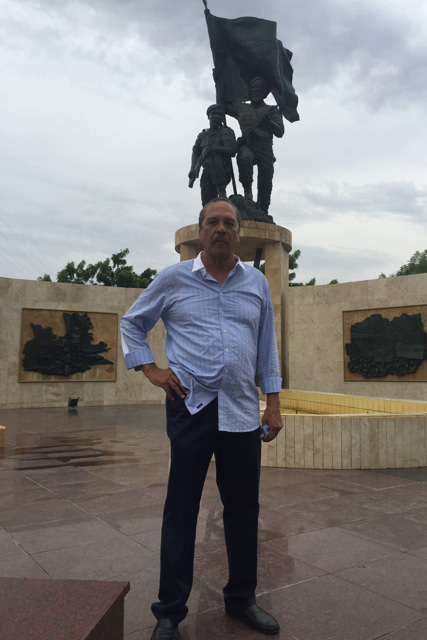
The following fact is known and documented: in early October 1975 several ZIS-3 guns were shipped to Angola from Cuba. At that time three Cuban transport vessels — Vietnam Heroico, Coral Island and La Plata — delivered to Angola about three hundred Cuban military instructors and a team of doctors, together with armaments: 120 mm and 82 mm mortars, 76 mm ZIS-3 guns, 14.5 mm ZPU-4 anti-aircraft mounts and ammunition for them.[19]
The ZIS-3 divisional anti-tank gun is an exceptionally well-designed and reliable weapon, even though it was created in the USSR during the Great Patriotic War. Thanks to its simplicity, reliability and mass production, it remained in service with the Soviet Army long after the war and was actively exported to many foreign countries, Cuba and Angola among them.
Carlos Xavier is an artilleryman. He trained in the USSR at the military academy in Odessa, where he came to know the ZIS-3 well. He recalls that the Cubans delivered a large quantity of 76 mm shells along with the guns — but that the shells were in assorted crates, not always the standard ones. They may have been stored in Cuba without due care.
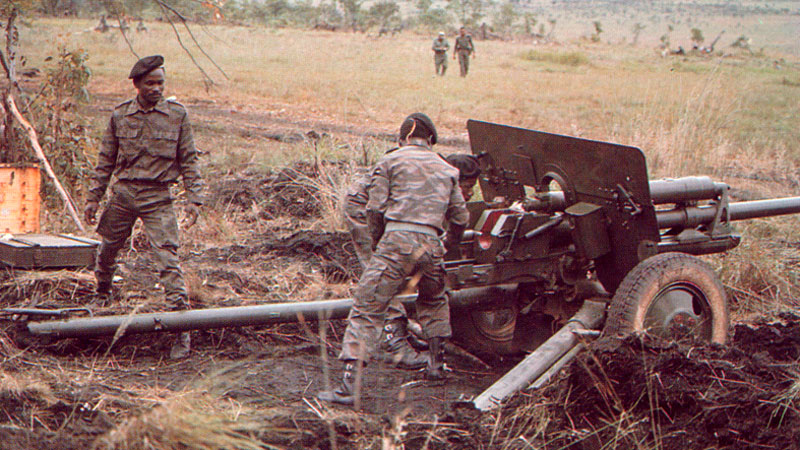
On this specific episode, Xavier told me the following: «In September and October we fought unequal battles against the enemy in the north as part of FAPLA’s 9th Infantry Brigade, falling back gradually on Luanda as we fought. The brigade command had been trained in the USSR, but we were seriously short of infantry. Artillery, however, we had in plenty: 76 mm guns, and also B-10s and B-12s — the so-called ‘Yugoslav recoilless guns’. I am no longer certain of their origin, because we simply found them somewhere in Luanda. The Soviet 76 mm guns were brought by the Cubans. That was our main artillery until the BM-21s appeared.
«The combat effectiveness of our artillery was further undermined by the fact that the shells for the 76 mm ZIS-3 guns had arrived from Cuba without fuzes. We tried to make good the shortfall by taking fuzes from shells for guns of other models, but on firing they failed to detonate at the target. After some time, however, the Cubans solved the problem, and a fresh consignment of 76 mm shells with the correct fuzes was brought from Cuba.
«At the Battle of Kifangondo I served in the crew of a Soviet 76 mm ZIS-3 gun. With me in the crew were my comrade Dinho Martinhs and a young Cuban volunteer whose name I no longer remember. We fired from the Kifangondo hill at the advancing Portuguese mercenaries, and every one of our shells detonated as it should. One of our rounds struck precisely at the base of the turret of an AML-90 armoured car moving at the head of the column, and the explosion partly destroyed it. On the shattered turret we could clearly see the mutilated body of the Portuguese mercenary who had been commanding the vehicle.»[20]
We can now form a more precise conjecture as to how such a falsehood came to appear in the book. It seems clear that E. George heard from one of his anonymous Cuban sources about «a shortage of fuzes for the shells of the ZIS-3 guns» and for some reason extrapolated the problem to the rockets of the BM-21. As the Russians say, the Briton «heard the bell ringing but could not tell where it was coming from». Did he do this accidentally or deliberately? I do not know. If accidentally, it demonstrates Edward George’s lack of conscientiousness as a research historian, whose duty is to verify such data. If deliberately — then God shall be his judge.
Incidentally, should anyone doubt the accuracy of General Xavier’s memory, I refer them to his recollections published in my Portuguese-language book «Batalha Histórica de Kifangondo», Editorial «Ethnica», ISBN 978-5-6041123-1-1. Xavier’s account appears there as a separate appendix (Anexo 3) at the end of the book, on pp. 120–125.[21] The book was published in Moscow back in 2018. There, admittedly without great detail, Xavier recalls the weapons the defending FAPLA fighters used at that period, and mentions the problem with the fuzes in passing: «Our main firepower [before the Battle of Kifangondo] consisted of 76 mm guns and B-10 and B-12 recoilless guns. But there was a difficulty, in that the ZIS-3 guns» — Xavier calls them C-76, from the Portuguese «Canhão-76», meaning «gun» — «turned out to have no fuzes for their shells; we tried to replace them with fuzes from shells of other systems, but they would not detonate.»[22]
Where did the historian Edward George disappear to?
And so our improvised journalistic investigation into the supposed shortage of fuzes for the BM-21 rockets used at the Angolan Battle of Kifangondo in November 1975 is complete. We have established that in his book the British historian Edward George committed outright defamation concerning one of the episodes of Soviet internationalist assistance to Angola in the most difficult period before the proclamation of independence. In this specific case I take «defamation» to mean the deliberate dissemination of inaccurate and knowingly false information with the aim of discrediting one of the episodes of internationalist assistance rendered to Angola by the USSR.
One might try to find the author of «The Cuban Intervention in Angola, 1965–1991: From Che Guevara to Cuito Cuanavale», write to him and ask him to acknowledge his error. It is hardly likely that he would do so — but still…
I became curious: what is the historian Edward George doing now? What is he working on? He spent some five years of his life on his dissertation, from 1996 to 2001. The University of Bristol awarded him a doctoral scholarship in Cuban and Angolan history in 1996. He worked for three years, and the fourth year of his work on the dissertation was funded by the British state body AHRB — the Arts and Humanities Research Board — which indicates that his research was taken seriously.[23]
He defended his dissertation in 2001. Before that he had worked hard, expended a great deal of energy and met a great many people. And I assumed that in the course of all this he, as a talented, creative and serious man, would have accumulated many ideas; that he must have come up against a number of historical puzzles requiring solution; that he had been drawn into this most interesting subject.
But to my surprise, I found no one of that name among the professors or ordinary staff listed on the University of Bristol’s website. Nor could I find any new English-language historical works by Edward George, Doctor of History. Edward George, the doctor of history, has simply vanished from the British academic scene.
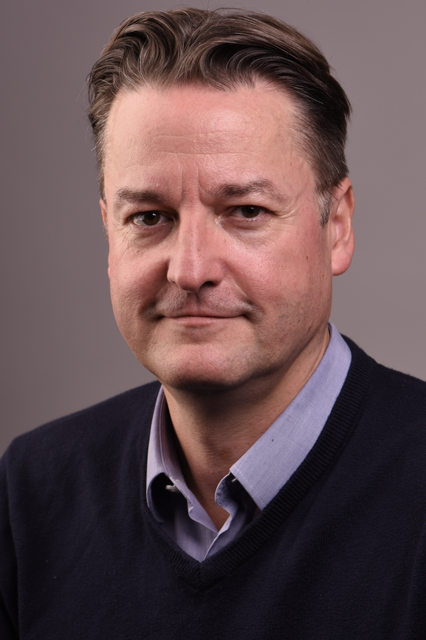
Instead there has appeared one Tedd George, head of the consultancy Kleos Advisory Ltd, which specialises in the analysis of African markets, commodity trade finance and financial technology. It turns out that this is one and the same man, who has changed his name and his profession.[24] It emerged that after defending his Bristol dissertation «on the Cuban intervention in Angola», Edward George abruptly lost interest in the subject — and in academic history altogether — and set off into free-floating freelance work under the name Tedd. He worked at the consultancy Economist Intelligence Unit as senior editor of its commodities and Africa desks (2005–2011), and then at the pan-African bank Ecobank. Today, as director of his own company Kleos Advisory Ltd, he gives paid lectures at universities and schools and runs seminars on a wide range of subjects — «from the Cuban Revolution and the Falklands War to financial inclusion and Africa’s digital transformation».[25]
I do not know what lies behind this. Possibly the dissertation and the published book were a kind of career springboard that served as the point of departure for a move into business? But that is only my supposition. It is also possible that not everything in the historical research he conducted under the auspices of the University of Bristol was smooth and, from a historical point of view, scrupulous — and that academia therefore simply rejected him. In that case the change of name from Edward to Tedd would be entirely explicable. But that, again, is only my supposition.
In any event, his precipitate departure from academic life only strengthens my opinion and confirms my supposition that Edward George is an extremely unserious historian. And the episode of defamation concerning the delivery of rocket launchers from the USSR to Angola supposedly «without fuzes for the rockets» is precisely a confirmation of this.
Someone may say: pay it no attention, these are trifles, an insignificant episode. Clearly the Briton trusted a bogus source and so set down information that does not correspond to reality.
Yet this falsehood has never been publicly refuted, and it is hardly likely ever to be acknowledged by the author of «The Cuban Intervention in Angola, 1965–1991: From Che Guevara to Cuito Cuanavale». It will in all probability go on circulating and spreading across the internet. And that is both sad and unjust.
Thanks to E. George, this falsehood has become entrenched in Wikipedia, which is accessible to all. Incidentally, the English-language Wikipedia article on the Battle of Kifangondo[26] abounds in other historical blunders besides this one. There, for instance, the very use of Soviet BM-21s in the battle is called into question — as though they had never been there at all, and with references to a number of serious historians. But what of the eyewitnesses and participants in the battle, who are still alive and testify to the contrary? What is to be done with them? A very strange «historical» resource, to say the least.
What can I advise? Verify every fact thoroughly. For Larry Sanger, the co-founder of Wikipedia himself, said not long ago in an interview with the German newspaper Berliner Zeitung that «Wikipedia has long been carefully edited by the US CIA». According to the Berliner Zeitung, Sanger said that the site has long been an organ of CIA propaganda; that Wikipedia was recognised from the outset as an important propaganda instrument and, he believes, used as one; that the rule of anonymity made it easy to use for such purposes; that it is hard to say precisely by whom, since all of them remain anonymous; but that a great deal of varied evidence shows the CIA made edits to Wikipedia.[27]
It is therefore entirely possible that in many historical sections of Wikipedia, references such as the one to E. George’s book are selected deliberately and with psychological calculation. A reader — especially a young one — looking at historical material and seeing such references to «historical works by major scholars» like E. George’s book will think: «Yes, the Soviets did help Angola win its independence, but they helped carelessly; they even forgot to send the fuzes for such a vital and expensive weapon…» The aim here is entirely clear and specific: to sow doubt, to discredit and to distort the truth.
Sergei Anatolyevich Kolomnin, Vice-President of the Union of Angola Veterans — interangola@mail.ru
Photographs used: from the website of the 81st Military Transport Aviation Regiment (vta81vtap.narod.ru); from the journal AviatsiyaiKosmonavtika, No. 11, 2005; from the archive of the Union of Angola Veterans; from the personal archive of Sergei Kolomnin; and from open internet sources. The photograph of E. George is taken from https://kleosadvisory.uk/about/
[1]The full title of E. George’s dissertation differs somewhat from that of the book: «The Cuban intervention in Angola, 1965–1991: from Che Guevara to Cuito Cuanavale: a detailed study of Cuban internationalism and the Angolan War».
[2]https://www.researchgate.net/publication/236763602_Angola_From_war_to_peace
[3]Piero Gleijeses is Professor of American Foreign Policy at the School of Advanced International Studies, Johns Hopkins University. Born in Italy and a graduate of the University of Geneva, he began his academic career as a professor of Latin American studies before moving to American foreign policy, and has written mainly on US policy in the Caribbean and Central America: one book on the 1965 invasion of the Dominican Republic (The Dominican Crisis: The 1965 Constitutionalist Revolt and American Intervention) and another on the Guatemalan revolution and the American overthrow of President Arbenz in 1954 (Shattered Hope: The Guatemalan Revolution and the United States, 1944–1954). Since 1994 he has worked on the clash between the United States and Cuba in Africa. His first book on the subject was Conflicting Missions: Havana, Washington, and Africa, 1959–1976, followed by Visions of Freedom, on the confrontation between Cuba, the United States, the Soviet Union and South Africa in southern Africa between 1976 and 1991.
[4]«…This book examines why a Caribbean country sent nearly half-a-million of its citizens to fight in Angola, and how a short term intervention escalated into a lengthy war of attrition, culminating in Cuba’s spurious ‘victory’ at Cuito Cuanavale.» See the preface to E. George’s book: http://elibrary.bsu.edu.az/files/books_163/N_141.pdf
[5]The author takes the view that to consider the Battle of Cuito Cuanavale in terms of historical justice means considering it not merely as the heroic defence of the small town of Cuito Cuanavale, which lasted from 14 November 1987 to 23 March 1988, but far more broadly. One must take into account the whole course of the fighting against the South Africans and UNITA in the provinces of Cuando Cubango, Cunene and Huíla from August 1987 to June 1988, including the Cuban advance and its arrival at the Namibian border. These events are inseparable and deeply interconnected.
[6]Three editions of this book have appeared. The Russian edition is entitled «Russkiy sled pod Kifangondo. NeizvestnyestranitsyistoriiChernoyAfriki» (The Russian Trace at Quifangondo: Unknown Pages in the History of Black Africa), Moscow: Etnika, 2014, 128 pp. plus plates, ISBN 7-341-31817-9 — https://www.veteranangola.ru/main/knigi/kifangongo. The Portuguese-language edition published in Russia: Serguei Kolomnin, «Batalha Histórica de Quifangondo», Editorial «Ethnica», 2018, 128 pp. plus photo gallery, ISBN 978-5-6041123-1-1 — https://www.veteranangola.ru/main/livro/Quifangondo. The Portuguese-language edition published in Angola: Serguei Kolomnin, «A Batalha de Kifangondonahistória de Angola», preface by António dos Santos França «Ndalu», Mayamba Editora, 2025, ISBN 978-989-761-560-3 — https://www.veteranangola.ru/main/livro/Kifangondo
[7]For details see https://www.veteranangola.ru/main/knigi/kifangongo, the chapter «The intervention of rocket artillery saved the capital», pp. 72–74.
[8]Soviet aircraft began landing in Luanda only after 11 November 1975. The figures for sorties and tonnage carried are taken by the author from an article in the journal AviatsiyaiKosmonavtika, No. 11, 2005 (https://itexts.net/avtor-aviaciya-i-kosmonavtika-zhurnal/148359-aviaciya-i-kosmonavtika-2005-11-aviaciya-i-kosmonavtika-zhurnal/read/page-2.htm), which carries an essay on the history of the Red Banner Mga Military Transport Aviation Division. Readers should note, however, a number of inaccuracies in that essay regarding the episode of internationalist assistance to Angola in November 1975. The decisive engagement at Quifangondo took place on 10 November 1975, not on the 12th. No French mercenaries took part in the battle, so the reference to the opinion of one of them is incorrect. Most importantly, the number of BM-21s carried from Brazzaville to Pointe-Noire aboard An-22s by the pilot B. Zhukov was four, not two, as confirmed by the recollections of Zhukov himself and of eyewitnesses V. Kostrachenkov and B. Putilin, and of Angolan and Cuban veterans of the battle. In addition, the caption to the photograph in the journal, «Delivery of a Grad to Angola. Pointe-Noire. Crew of Lieutenant Colonel B. P. Zhukov, 1978», wrongly gives the year as 1978; the correct year is 1975.
[9]https://djvu.online/file/KDTD3lLh44W2u
[10]For V. Kostrachenkov’s recollections in full see https://www.veteranangola.ru/main/50let/memories/kostrachenkov
[11]This was in fact the deputy commander of the 81st Military Transport Aviation Regiment, Lieutenant Colonel B. Zhukov, though Kostrachenkov did not know his name at the time.
[12]According to the published recollections of Lieutenant Colonel B. Zhukov, commander of the An-22 crew (tail number 09334) that flew into Pointe-Noire: «After landing [at Brazzaville] a representative of our embassy drove up to me and said that the cargo was to be delivered to Pointe-Noire in the Congo, right on the ocean shore. I said the crew was not prepared for such a flight because the airfield was not equipped to take an An-22. Only after flying out to reconnoitre in an An-12 and reporting to Moscow that an An-22 landing was feasible did I fly four missions carrying equipment to that airfield.» See https://vta81vtap.narod.ru/memuar/zhukov_bp.htm. According to the recollections of Boris Putilin, former First Secretary of the Soviet embassy in Brazzaville and concurrently GRU resident in the country, given in an interview with the author: «One BM-21 was loaded into each An-22 in order to reduce the aircraft’s weight and its landing run at Pointe-Noire.» Four An-22 flights were thus made, carrying four BM-21 Grads for onward shipment to Luanda.
[13]The fuzes are identical in shape; the principal difference lies in the arming time, which is immaterial for our purposes.
[14]«Two twenty-rocket salvos from the BM-21 decimated the soldiers at the chicken farm, and then it turned its fire on the main force, raining down over 700 missiles over the next few hours.» See http://elibrary.bsu.edu.az/files/books_163/N_141.pdf, p. 90.
[15]In the USSR, assistance to national liberation movements abroad was supervised by the GRU of the General Staff of the Soviet Armed Forces. After retiring, B. G. Putilin — Doctor of Historical Sciences, professor, member of the Russian Academy of Natural Sciences and a GRU veteran — worked for many years at the Institute of Military History of the Ministry of Defence of the USSR and of Russia, analysing the processes of the Cold War and the structure, nature, strategy and tactics of international terrorism. He is co-author, with V. A. Zolotaryov, of «Revenge for Victory: The Soviet Union and the Cold War», and his book «The Terrorist International» (ISBN 5-86090-121-6) is widely known.
[16]Entrevista com o veteranocubano da guerraem Angola, García Martínez. Havana, 22 de Outubro de 2008. https://www.veteranangola.ru/main/livro/Kifangondo
[17]https://veteranangola.milportal.ru/vyshla-v-svet-kniga-rossijskogo-avtora-sergeya-kolomnina-bitva-pri-kifangondo-v-istorii-angoly-na-portugalskom-yazyke/
[18]La Guerra de Angola, Editora Política, La Habana, 1989; José M. Ortiz, Angola: Un abrilcomo Girón, Editora Política, La Habana, 1979.
[19]S. Kolomnin, «Russkiy sled pod Kifangondo. NeizvestnyestranitsyistoriiChernoyAfriki», Moscow: Etnika, 2014, p. 20.
[20]The account was dictated by C. Xavier over the telephone; the author received and has preserved the audio recording.
[21]https://www.veteranangola.ru/main/livro/Quifangondo
[22]«Oscanhões 76 mm e os B-10 e os B-12 (assimchamadososcanhõesJugoslavos — nãotenho a certeza da origem pois jáosencontramosem Luanda (semrecuo) eram as nossasarmas de artilharia. Com aagravantequeos C-76 mm vieramsemespoletas (foramcolocadasalgumasespoletas de outrasarmas mas nãoexplodiam).»
[23]Standard funding for a doctoral dissertation in the United Kingdom is normally calculated for three years. For complex projects, however — for example those involving placements, the study of rare languages or museum practice — the AHRB/AHRC awarded grants on a «3+1» basis, the fourth year covering the writing up of the thesis.
[24]https://kleosadvisory.uk/about/ The profile there reads: «Tedd George (aka Dr Edward George) is the founder and Chief Narrative Officer of Kleos Advisory.»
[25]Ibid.
[26]https://en.wikipedia.org/wiki/Battle_of_Quifangondo
[27]https://www.rbc.ru/technology_and_media/07/08/2026/6a763c4b9a7947597c92f3f1